Why Your Skin Tolerates Retinoid Better in Some Seasons Than Others
Quick Answer: Retinoid tolerance shifts seasonally mainly because of changes in ambient humidity and skin barrier hydration — dry winter air and indoor heating tend to leave skin more prone to irritation, while more humid conditions in warmer months can improve tolerance, though increased sun exposure in summer adds its own separate irritation risk that can offset that benefit.
January and July, same tube of retinoid, same three-nights-a-week routine — and somehow one season leaves skin calm and the other leaves it flaking by the sink. The product hasn’t changed. The air around it has.
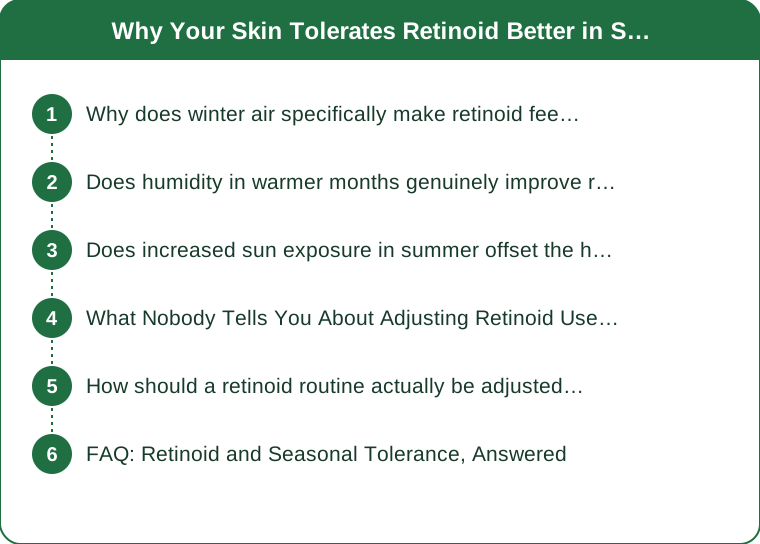
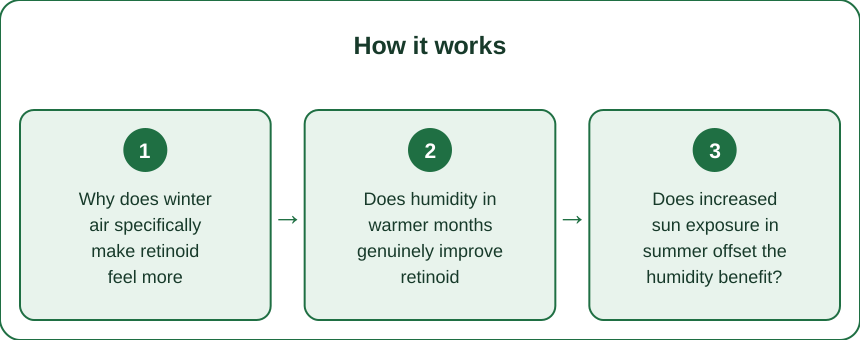
Why does winter air specifically make retinoid feel more irritating?
Cold outdoor air holds less moisture, and indoor heating further dries the air, both of which reduce the skin barrier’s hydration level before retinoid is even applied — since retinoids already have a mild dehydrating, barrier-thinning effect as part of how they work, applying them onto a skin barrier that’s already compromised by dry seasonal air tends to compound the irritation more than the same product would on well-hydrated skin.
Does humidity in warmer months genuinely improve retinoid tolerance, or is that a myth?
It’s generally accurate — higher ambient humidity helps the skin barrier retain more moisture, and a better-hydrated barrier is more resilient to retinoid’s exfoliating and barrier-thinning effects, which is why many people find they can use retinoid slightly more frequently or at a slightly higher concentration during more humid months without the same irritation seen in dry winter conditions.
Does increased sun exposure in summer offset the humidity benefit?
Yes, and this is an important caveat — retinoids increase photosensitivity, and summer’s longer days and more frequent sun exposure raise the risk of sun-related irritation on retinoid-treated skin even if humidity is otherwise helping barrier tolerance, meaning summer isn’t simply ‘easier’ for retinoid use overall, just easier specifically from a humidity and hydration standpoint — sunscreen diligence needs to increase to match.
What Nobody Tells You About Adjusting Retinoid Use By Season
Most retinoid guides give a single fixed frequency recommendation as if the skin’s tolerance stays constant year-round, but nobody tells you that many dermatologists actually recommend adjusting frequency seasonally — scaling back to fewer nights per week and adding more moisturizer during dry winter months, then potentially increasing frequency slightly during more humid months — as a normal part of using retinoid long-term rather than sticking rigidly to one schedule regardless of season.
How should a retinoid routine actually be adjusted between seasons?
In drier months, applying a richer moisturizer both before and after retinoid (the ‘sandwich’ approach), reducing frequency if irritation increases, and paying closer attention to any flaking or redness helps manage the added seasonal barrier stress; in more humid months, maintaining diligent sunscreen use becomes the priority adjustment, since improved tolerance to dryness doesn’t offset the increased photosensitivity risk from more sun exposure.
FAQ: Retinoid and Seasonal Tolerance, Answered
Should retinoid frequency be reduced automatically every winter regardless of how skin feels?
A proactive reduction isn’t necessary for everyone, but watching more closely for early signs of irritation (increased flaking, redness, sensitivity) during dry months and adjusting frequency in response is a reasonable approach rather than waiting for significant irritation to develop.
Does using a humidifier indoors help offset winter retinoid irritation?
Yes — a humidifier can help counteract the drying effect of indoor heating on both the air and the skin barrier, which may reduce how much retinoid tolerance drops during winter months.
Is it necessary to stop retinoid entirely in summer because of the photosensitivity increase?
Not necessarily — continuing retinoid with consistent daily sunscreen (reapplied as needed) and reduced direct sun exposure during peak hours allows many people to continue their routine through summer without stopping entirely, though a dermatologist can advise on individual risk factors.
TL;DR:
- Dry winter air and indoor heating reduce skin barrier hydration, increasing retinoid irritation risk
- Higher humidity in warmer months generally improves barrier resilience and retinoid tolerance
- Increased summer sun exposure raises photosensitivity risk, offsetting some of that humidity benefit
- Adjusting frequency and moisturizer use seasonally, rather than a fixed year-round routine, works better long-term
This is general information, not medical advice — a dermatologist can help tailor retinoid use to individual skin needs. If a long-tolerated retinoid routine suddenly feels irritating, checking the season and indoor air conditions is worth doing before assuming the product has stopped working.
Keep Reading
This article is for general informational and styling purposes only. Fit, sizing, and product availability may vary.