Why the Exact Same Retinoid Routine Works Great in Winter and Irritates You All Summer
Quick Answer: Higher UV exposure, increased sweating, and a naturally more compromised skin barrier from heat and humidity swings all combine in summer to make skin more reactive to retinoids at the exact same concentration and frequency that felt fine in winter.
Your winter self would not believe how much this identical tube of retinol is currently wrecking your skin in July.
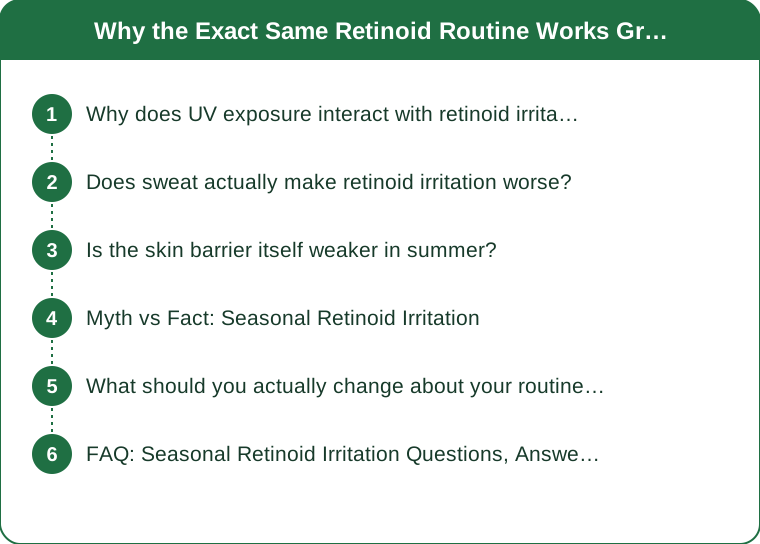
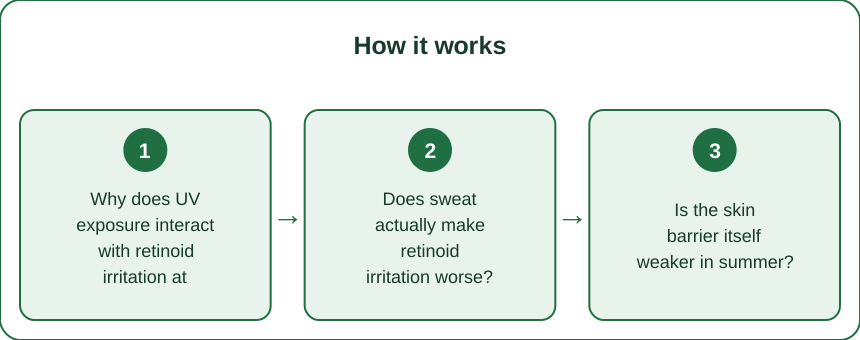
Why does UV exposure interact with retinoid irritation at all?
Retinoids already increase skin’s photosensitivity somewhat, meaning skin becomes more reactive to UV exposure while using them. In summer, actual UV exposure is dramatically higher even with sunscreen (which is never 100% protective), compounding with the retinoid’s own sensitizing effect in a way winter’s lower-UV months simply don’t trigger to the same degree.
Does sweat actually make retinoid irritation worse?
Yes — sweat is mildly acidic and can reactivate or redistribute retinoid product still sitting in pores or fine lines hours after application, especially with summer’s higher ambient heat and humidity increasing sweat frequency. This is a mechanical, not just environmental, reason summer sweat sessions can trigger irritation that wouldn’t happen in a cooler, drier winter routine.
Is the skin barrier itself weaker in summer?
It can be, somewhat counterintuitively — rapid temperature swings between air-conditioned indoor spaces and hot outdoor air stress the skin barrier, and increased use of products like sunscreen, sweat-wicking, and more frequent washing in summer can also mechanically disrupt the barrier more than winter’s typically more stable indoor routine.
Myth vs Fact: Seasonal Retinoid Irritation
Myth: Retinoids should always be paused entirely in summer. Fact: many dermatologists recommend continuing at a possibly reduced frequency with extra-diligent sun protection, rather than stopping altogether, since consistent use over time is part of what makes retinoids effective.
Myth: Sunscreen fully cancels out retinoid photosensitivity. Fact: sunscreen significantly reduces but doesn’t eliminate the interaction — reapplication frequency and actual UV exposure time still matter even with SPF applied.
What should you actually change about your routine seasonally?
Consider reducing frequency (every third night instead of every other night, for example) through peak summer months rather than eliminating retinoid use entirely, and be more rigorous about reapplying sunscreen if you’re outside for extended periods, since a single morning application often isn’t enough coverage for a full sweaty summer day.
FAQ: Seasonal Retinoid Irritation Questions, Answered
Should retinoid application timing change in summer?
Nighttime application remains standard regardless of season, since retinoids break down in UV light — the seasonal change is more about frequency and sun protection diligence than timing.
Is it normal for retinoid tolerance to fluctuate seasonally for years?
Yes, many people notice a consistent seasonal pattern year after year and adjust their routine proactively once they recognize it.
This is general information, not medical advice — persistent or severe irritation should be evaluated by a dermatologist.
TL;DR:
- Higher UV exposure compounds with retinoid photosensitivity more in summer
- Increased sweat can reactivate product and mechanically irritate skin
- Temperature swings and heavier summer routines can stress the skin barrier
- Consider reduced frequency and more diligent sun protection rather than stopping entirely
Keep Reading
This article is for general informational and styling purposes only. Fit, sizing, and product availability may vary.