Why Your Retinoid Routine Stops Working After It Was Working Great
Quick Answer: A retinoid plateau — where a product that produced visible improvement for months suddenly seems to stop helping — is usually explained by the skin adapting to the current concentration and frequency rather than the product losing effectiveness, and the fix is typically adjusting concentration, frequency, or pairing rather than switching products entirely.
The plateau feels like the product failed, but it’s more often a sign your skin has simply caught up to what that dose is capable of delivering.

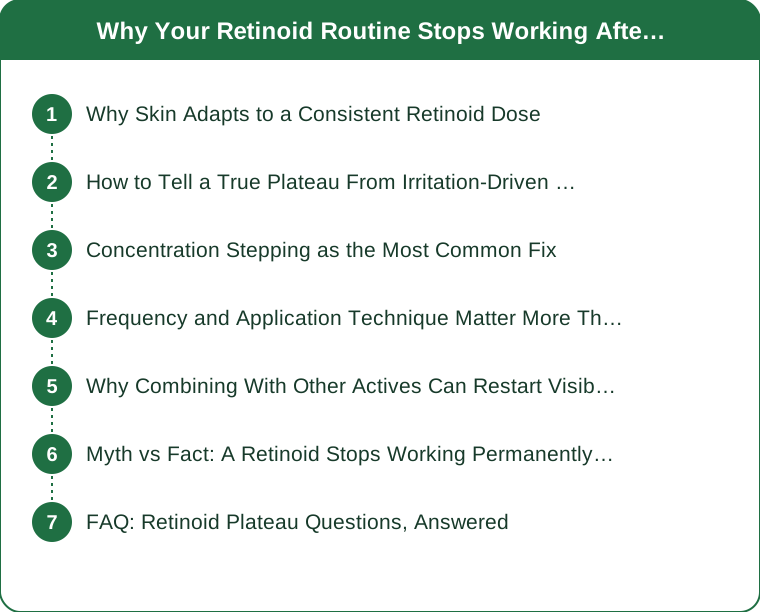
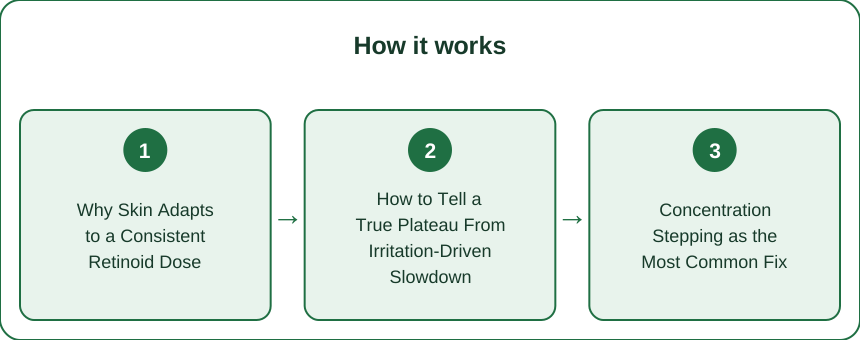
Why Skin Adapts to a Consistent Retinoid Dose
Retinoids work by increasing cell turnover and stimulating collagen-related activity, and skin — like many biological systems — tends to normalize around a consistent stimulus over time. A concentration that produced dramatic initial improvement is still doing its job at the plateau point; it’s simply no longer producing new visible change because the skin has adapted to that specific level of stimulus, similar to how a fixed workout routine eventually stops producing new strength gains without progression.
How to Tell a True Plateau From Irritation-Driven Slowdown
Redness, flaking, or sensitivity accompanying the stalled progress points toward irritation-related barrier disruption rather than a true plateau, and the fix there is reducing frequency or adding barrier support, not increasing potency. A genuine plateau, by contrast, shows calm, tolerant skin that simply isn’t producing new visible improvement — a meaningfully different starting point that calls for the opposite response.
Concentration Stepping as the Most Common Fix
Moving from a lower-strength retinoid to a moderately higher concentration, done gradually to avoid over-irritating, is the most common and generally effective way past a plateau — the skin hasn’t developed permanent tolerance so much as it’s fully adapted to that specific dose. This step-up is typically done in increments over several weeks, not all at once, watching for any return of irritation as the signal to slow down.

Frequency and Application Technique Matter More Than People Expect
Increasing application frequency (from 2-3x weekly to nightly, for instance) can restart progress without changing concentration at all, and application technique — using enough product, allowing it to fully absorb, applying to fully dry skin — affects how much active ingredient the skin is actually receiving regardless of the labeled percentage. A plateau sometimes resolves simply by correcting an application habit that was quietly under-dosing the skin the whole time.
Why Combining With Other Actives Can Restart Visible Progress
Introducing a complementary active — a gentle exfoliating acid on non-retinoid nights, or a vitamin C in the morning routine — can produce visible improvement that retinoid alone had plateaued on, since different actives target overlapping but distinct skin processes. This should be introduced one product at a time to correctly identify what’s working and to avoid overwhelming the skin barrier all at once.
Myth vs Fact: A Retinoid Stops Working Permanently If Results Slow Down
Myth. A retinoid doesn’t lose its underlying mechanism of action — the skin’s response to a fixed dose simply levels off, which is a normal adaptation pattern, not a sign the ingredient has become ineffective. Fact: most plateaus respond well to a deliberate, gradual adjustment in concentration, frequency, or a complementary active, generally within 6-8 weeks of the change, without needing to abandon retinoids altogether.
FAQ: Retinoid Plateau Questions, Answered
How long should I use a retinoid at one concentration before expecting a plateau?
Most people see continued improvement for roughly 3-6 months at a given concentration before plateauing becomes likely, though this varies by individual skin and specific product.
Is it safe to increase retinoid strength without a dermatologist?
Gradual over-the-counter concentration increases are generally safe for most people if done slowly with attention to irritation, though a dermatologist consultation is worthwhile for prescription-strength jumps or persistent sensitivity.
Could my plateau actually be a sign I should take a break instead?
Possibly, if signs of irritation or barrier stress are present — a short break with heavier moisturization can sometimes reset tolerance and improve how the skin responds when retinoid use resumes.
TL;DR:
- A retinoid plateau usually means the skin has adapted to a consistent dose, not that the product stopped working
- Distinguish true plateau (calm skin, stalled progress) from irritation-driven slowdown (redness, flaking) before adjusting
- Gradual concentration increases, frequency changes, or better application technique commonly restart progress
- Adding a complementary active, introduced one at a time, can address what retinoid alone has plateaued on
A stalled routine isn’t a sign to give up on retinoids — it’s usually a sign the dose needs a deliberate, gradual step up.
Keep Reading
This article is for general informational and styling purposes only. Fit, sizing, and product availability may vary.