Why Retinoid 'Purging' Actually Means It's Working (Usually)
Quick Answer: Retinoid ‘purging’ — a temporary breakout in your usual acne-prone areas during the first few weeks — happens because retinoids speed up skin cell turnover, pushing existing microcomedones to the surface faster than they’d normally emerge, and it typically resolves within 2-6 weeks.
Your skin looked worse two weeks into using retinol than before you started. That’s frustrating, but in most cases it’s a predictable phase, not a sign to stop.

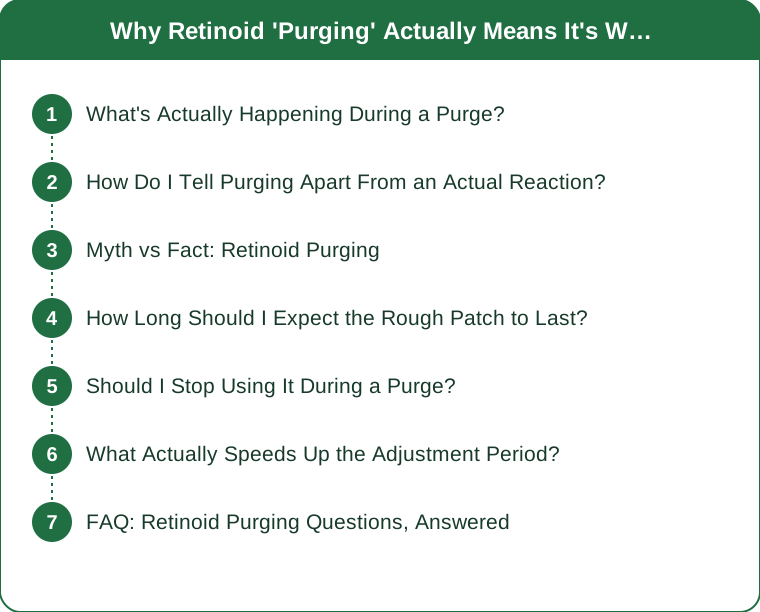
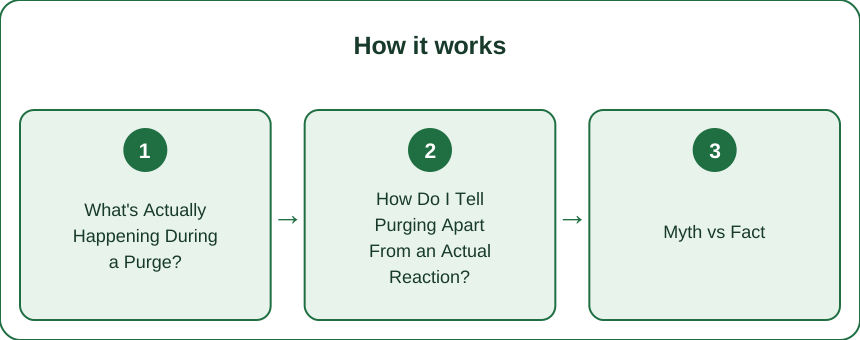
What’s Actually Happening During a Purge?
Retinoids accelerate cell turnover, which means blemishes that were already forming under the skin get pushed to the surface faster than they would have on their own. You’re not developing new problems — you’re seeing existing ones surface ahead of schedule.
How Do I Tell Purging Apart From an Actual Reaction?
Purging happens only in your normal breakout zones and resolves within a few weeks. A true irritant reaction shows up as redness, burning, or breakouts in new areas you don’t normally get them, and tends to get worse rather than better over the same timeframe — that pattern means it’s time to scale back, not push through.
Myth vs Fact: Retinoid Purging
Myth: Any breakout after starting a retinoid is purging. Fact: Breakouts in new locations, combined with burning or peeling beyond mild flaking, is more likely irritation than purging — the two need different responses.

How Long Should I Expect the Rough Patch to Last?
Most purging resolves within 2-6 weeks of consistent, correctly-dosed use. If breakouts are still worsening past 6-8 weeks, it’s worth reassessing frequency or strength rather than assuming it’ll eventually pass.
Should I Stop Using It During a Purge?
Generally no — stopping and restarting resets the adjustment process, meaning you may go through a version of the purge again later. Reducing frequency (every other night instead of nightly) is usually a better middle ground than stopping entirely.
What Actually Speeds Up the Adjustment Period?
Starting low and slow — 2-3 nights a week with a pea-sized amount, paired with a gentle moisturizer — reduces both the intensity of purging and the risk of true irritation, compared to starting nightly at full strength.
FAQ: Retinoid Purging Questions, Answered
Should I use a new retinoid product if I’m currently purging on another one?
No — switching products mid-purge resets your skin’s adjustment and can make things look worse for longer; stick with one product through the adjustment window.
Does purging happen with every retinoid strength?
It can happen with any strength, though higher-strength or prescription-strength retinoids tend to produce a more noticeable purge than gentler over-the-counter options.
Is it normal to purge again after increasing strength later?
Yes — a strength increase can trigger a smaller version of the same process, since it’s again accelerating turnover beyond your skin’s prior adjustment level.
TL;DR:
- Purging happens because retinoids speed up turnover of blemishes already forming
- It should stay confined to your usual breakout zones and improve within weeks
- New-area breakouts, burning, or worsening past 6-8 weeks point to irritation instead
- Reducing frequency, not stopping, is usually the better response to a rough patch
- Starting low and slow reduces both purging severity and irritation risk
This is general skincare information, not medical advice — persistent or severe reactions are worth seeing a dermatologist about.
Keep Reading
This article is for general informational and styling purposes only. Fit, sizing, and product availability may vary.