Why Late Summer Is the Right Time to Restart a Retinoid
Quick Answer: Building retinoid tolerance takes 8 to 12 weeks, and irritation is worse in cold, dry, low-humidity conditions. Starting your ramp-up in late August means you build tolerance while humidity is still relatively high and finish the hardest weeks before heating season begins. Restart at two nights a week with a pea-sized amount and increase every two weeks, not every week.
You stopped in early summer because of sun and sweat, and you were planning to pick it back up when the weather cooled properly.
That timing is backwards. The cold, dry months are the hardest time to build tolerance, not the easiest — so the ramp-up should happen before them.
Here is why now, and exactly how to restart.

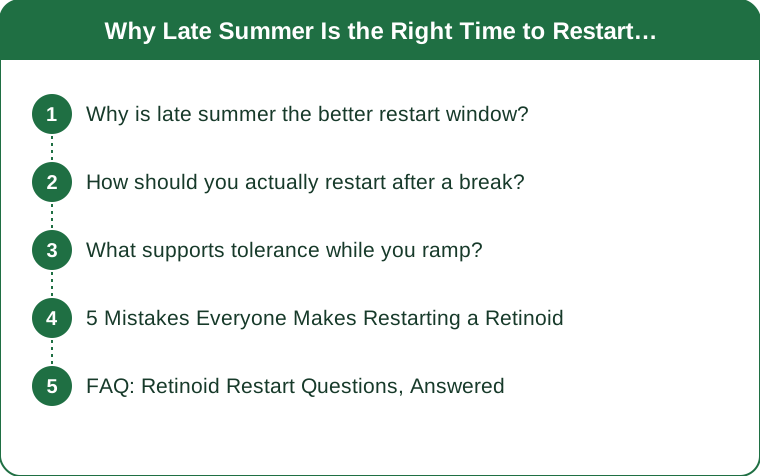
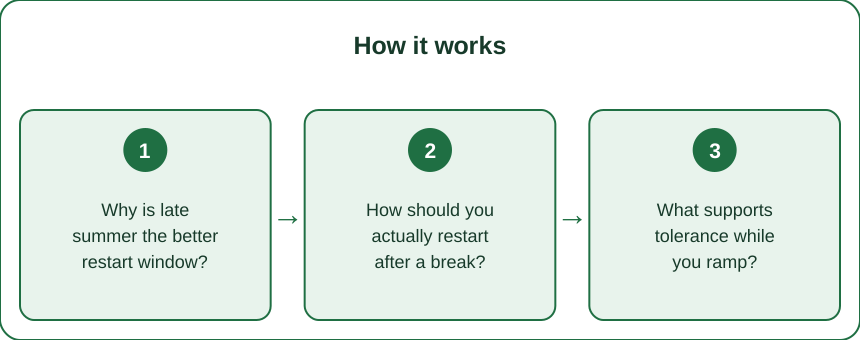
Why is late summer the better restart window?
Because tolerance takes weeks to build and the conditions for building it are best right now.
Ambient humidity supports the barrier. Retinoid irritation is largely a barrier disruption problem, and a compromised barrier loses more water in dry air. Late-summer humidity means less transepidermal water loss during the weeks your barrier is most vulnerable.
Indoor heating has not started. Forced-air heating is one of the harshest things a retinizing barrier faces. Finishing your ramp-up before it starts is genuinely easier.
Tolerance takes 8 to 12 weeks. Starting in late August puts you at full tolerance around late October or November — precisely when you want your skin to be robust rather than actively adapting.
And UV exposure is already declining. The concern with summer retinoid use is photosensitivity and diligent sun protection. Late August into September has meaningfully lower UV index than June while still being warm and humid — which is the specific overlap that makes this window ideal.
How should you actually restart after a break?
Lower than you left off, and slower than you think you need.
Do not resume at your old frequency. Tolerance decays over a break of more than a few weeks. Restarting at nightly use because that is where you stopped is the single most common cause of a bad retinoid restart.
Two nights a week for two weeks. Then three nights for two weeks, then four, and so on. Increase every two weeks rather than every week — the two-week interval is what separates a smooth ramp from a peeling one.
A pea-sized amount for the whole face. More product does not produce faster results and does produce more irritation. This is one of the most consistently ignored instructions in skincare.
Apply to completely dry skin. Damp skin increases penetration and irritation. Wait a few minutes after cleansing.
And go back a step if you flake. Mild dryness is normal; visible peeling, stinging, or redness means you moved too fast. Drop back one level for two weeks and continue from there.

What supports tolerance while you ramp?
A simple routine, a good moisturizer, and the discipline to remove everything else.
Strip the routine back. During the ramp-up, use a gentle cleanser, the retinoid, and a moisturizer. Pause acids, vitamin C in the same session, scrubs, and anything labeled brightening or resurfacing.
Try the sandwich method. Moisturizer, then retinoid, then moisturizer again. It reduces irritation noticeably and the evidence suggests it slows delivery rather than blocking the effect.
Look for barrier ingredients. Ceramides, glycerin, panthenol, and squalane in your moisturizer support the barrier that the retinoid is disrupting. This is not optional during a ramp.
Daily sunscreen, non-negotiable. Retinoids increase photosensitivity and much of their benefit is undone by unprotected exposure. Broad-spectrum SPF 30 or higher every morning, including cloudy September days.
Give it 12 weeks before judging results. Texture changes appear around 8 to 12 weeks; pigment and fine lines take considerably longer — often 6 months. Judging a retinoid at week four is how most people conclude it does not work for them.
5 Mistakes Everyone Makes Restarting a Retinoid
1. Resuming at the old frequency. Tolerance fades over a break. Restart low regardless of where you left off — this alone prevents most bad restarts.
2. Using too much product. A pea-sized amount covers the whole face. Doubling it doubles the irritation and does not improve the outcome.
3. Stacking actives during the ramp. Acids, vitamin C, and scrubs alongside a fresh retinoid ramp is how people end up with a compromised barrier and quit entirely.
4. Pushing through visible peeling. Peeling is not the retinoid working; it is the barrier failing. Step back, recover, and continue — the end result is the same and the process is far more pleasant.
5. Quitting at week six. The awkward stage is real and it is temporary. Most of the benefit arrives after the point where people give up.
This is general skincare information, not medical advice. If you are pregnant, breastfeeding, or trying to conceive, do not use retinoids without speaking to a healthcare professional. Persistent irritation or a reaction warrants a dermatologist’s input.
FAQ: Retinoid Restart Questions, Answered
Do I have to stop in summer at all?
Not necessarily. Many people use retinoids year round with diligent sunscreen. Summer breaks are common because of sweat, sun exposure, and holidays rather than an absolute rule. If you did stop, late summer is the best time to come back.
Should I restart with a lower strength?
If your break was longer than a couple of months and your previous strength was uncomfortable, dropping down is reasonable. Otherwise keep your strength and reduce frequency instead — frequency is the easier variable to control.
How do I know if it is working before the 12 weeks are up?
Around weeks 4 to 6 many people notice skin feeling smoother and makeup sitting better before any visible change. That is a reasonable early sign. Peeling and irritation are not indicators of effectiveness.
TL;DR:
- Tolerance takes 8 to 12 weeks to build, and building it is hardest in cold, dry, heated air.
- Starting in late August means you finish the difficult weeks before heating season, with humidity still helping and UV already declining.
- Restart at two nights a week and increase every two weeks, not every week.
- A pea-sized amount on completely dry skin; more product means more irritation and no faster results.
- Strip the routine to cleanser, retinoid, moisturizer during the ramp; try the sandwich method; daily SPF 30+.
- Step back one level if you see visible peeling, and give it 12 weeks before judging.
Everyone restarts their retinoid in November and spends the harshest six weeks of the year building tolerance. Do the ramp now, while the air is still helping you, and you arrive at winter with skin that is already adapted.
Keep Reading
This article is for general informational and styling purposes only. Fit, sizing, and product availability may vary.