Why Retinoid Purging Is Actually a Sign the Product Is Working
A wave of new breakouts a few weeks into a retinoid routine feels like a clear sign the product isn’t working, but that specific pattern, called purging, is actually a predictable and even reassuring sign of the mechanism doing exactly what it’s supposed to.

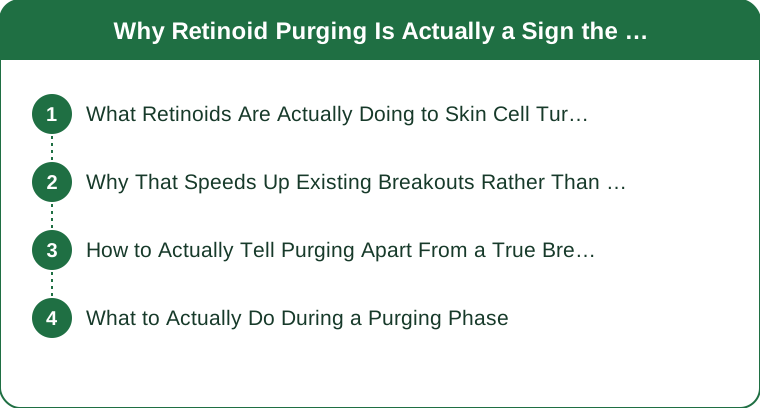
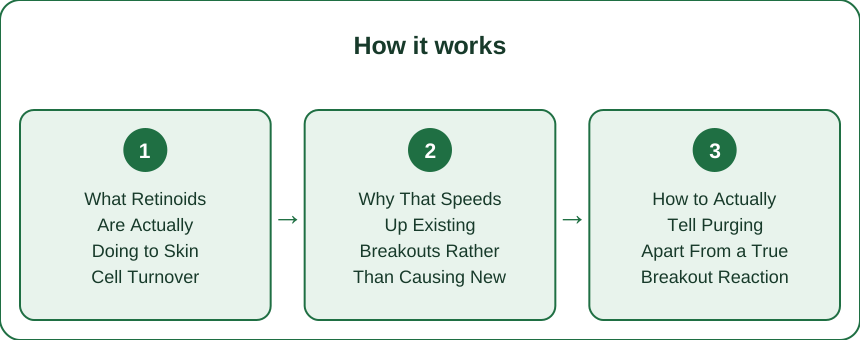
What Retinoids Are Actually Doing to Skin Cell Turnover
The mechanism: retinoids accelerating skin cell turnover rate, which pushes built-up debris, oil, and microcomedones that were already forming below the surface up and out faster than they would have surfaced naturally on their own.
Why That Speeds Up Existing Breakouts Rather Than Causing New Ones
The key distinction: purging surfacing blemishes that were already forming beneath the skin before the retinoid was ever introduced, simply on an accelerated timeline, rather than the retinoid creating new blemishes that wouldn’t have existed otherwise.

How to Actually Tell Purging Apart From a True Breakout Reaction
The distinguishing pattern: purging typically appearing in areas that already broke out previously, and resolving within roughly four to six weeks, while a true irritation or allergic reaction tends to show up in new areas and comes paired with burning, itching, or redness beyond typical dryness.
What to Actually Do During a Purging Phase
The practical guidance: continuing the retinoid at the current frequency through a purge specifically if it matches the expected pattern and timeline, rather than stopping at the first sign of new breakouts, and consulting a dermatologist if the reaction extends past six weeks or includes true irritation signs, and the frame (purging is accelerated surfacing of blemishes that were already forming, not new damage — a four-to-six week timeline in already-prone areas is the sign that distinguishes it from a genuine reaction that means stopping the product.)
A wave of new breakouts a few weeks into a retinoid routine feels like a clear sign the product isn’t working, but retinoids accelerate skin cell turnover rate, which pushes built-up debris, oil, and microcomedones that were already forming below the surface up and out faster than they would have surfaced naturally on their own. That means purging surfaces blemishes that were already forming beneath the skin before the retinoid was ever introduced, simply on an accelerated timeline, rather than the retinoid creating new blemishes that wouldn’t have existed otherwise, and purging typically appears in areas that already broke out previously and resolves within roughly four to six weeks, while a true irritation or allergic reaction tends to show up in new areas paired with burning, itching, or redness beyond typical dryness. Continuing the retinoid at the current frequency through a purge that matches that expected pattern and timeline, rather than stopping at the first sign of new breakouts, and checking with a dermatologist if the reaction extends past six weeks or includes true irritation signs, is the more accurate way to respond.
Keep Reading
This article is for general informational and styling purposes only. Fit, sizing, and product availability may vary.