The Retinoid Edit: The Gold-Standard Ingredient, Decoded
Skincare is a stadium of arguments with one quiet consensus corner: retinoids. The vitamin-A family is the most-studied, most dermatologist-endorsed topical for skin aging and texture — and the most commonly quit, because nobody explains the start. The decoder. (Info; skin conditions and pregnancy are clinician conversations.)

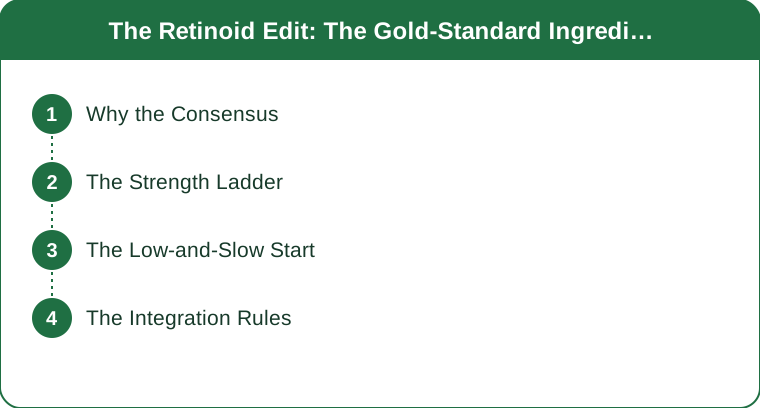
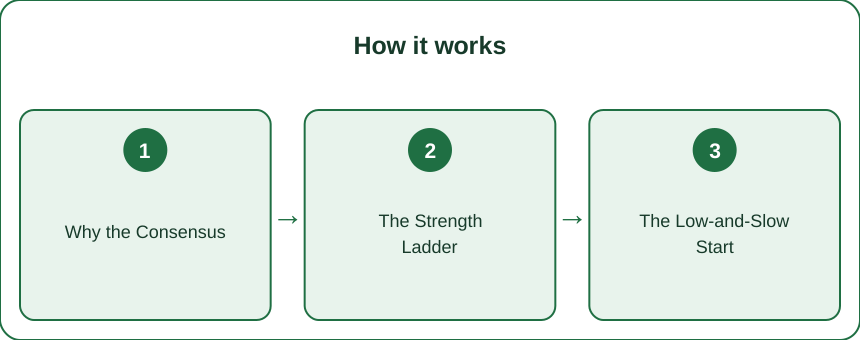
Why the Consensus
The evidence file: retinoids increase cell turnover and stimulate collagen production (the mechanism behind the fine-line, texture and tone improvements documented across decades of studies — tretinoin’s research record spans generations), they treat acne and aging simultaneously (the rare dual-mandate ingredient), and the results compound over months-to-years (the retinoid user’s skin at year three is the advertisement — this is a long-game ingredient in an instant-gratification aisle). The SPF marriage clause: retinoids and daily sunscreen are a package deal — turnover-fresh skin burns easier, and UV undoes the collagen work.
The Strength Ladder
The family tree, weakest to strongest: retinyl esters (the gentlest, slowest rung), retinol (the over-the-counter standard — real results at patient timelines), retinal/retinaldehyde (the OTC power tier — closer to prescription strength with better tolerability than expected), adapalene (the OTC-in-many-countries acne-derived option), and the prescription tier (tretinoin and friends — the gold standard the research is built on). The ladder wisdom: start where your skin is (sensitive types start low; the impatient still shouldn’t skip rungs), and percentage comparisons only work within the same rung.

The Low-and-Slow Start
The protocol that prevents quitting: twice a week for two weeks, then every other night, then nightly as tolerated (the schedule IS the treatment plan — the retinization phase of dryness and flaking is dose-dependent and manageable, not a sign to stop), the pea-size rule (one pea for the whole face — more is redness, not results), the sandwich method for sensitive skin (moisturizer, retinoid, moisturizer — dilution that preserves benefit), night-only application (the molecule and the logic both prefer darkness), and the buffer zones (eye corners, nostril creases and lips collect product and grievances — a dab of balm fences them off).
The Integration Rules
Playing well with a routine: SPF every morning is non-negotiable (the pairing rule again — it’s one decision, not two), introduce nothing else new during the ramp (the sensitive-skin one-variable doctrine — if skin gets angry, you need to know why), the exfoliating-acid negotiation (same night is a lot for most skins — alternate nights is the diplomatic answer), pregnancy pauses the category (the standing medical guidance — the clinician conversation), and the patience contract: judge at three months, not three uses (the mirror timeline: texture first, tone second, lines the slow third). One pea, most nights, forever-ish — the boring routine with the least boring evidence in skincare.
One pea, night only, ramp slowly, SPF is the other half. Retinoids are skincare’s consensus corner — the start is the hard part, and now it’s decoded.
Keep Reading
This article is for general informational and styling purposes only. Fit, sizing, and product availability may vary.